Time-accurate, GPU-accelerated solver for hypersonic reacting flows, with high-order schemes and on-the-fly rendering of flow fields with hundreds of millions of grid points.
~30× faster than multi-node CPU codes
300M grid points on one GPU
On-the-fly rendering
Overview
HAVA-HYPERFDX1 is an in-house GPU-accelerated solver for hypersonic reacting flows developed by the PI. It uses high-order numerical schemes to resolve complex flow physics with high fidelity in a fully time-accurate framework. Designed for large-scale simulations of extreme-flow environments, it uses modern GPU architectures to reach high computational efficiency while keeping excellent numerical accuracy.
The solver renders and rasterizes the flow on the fly, so massive datasets can be visualized during the run without costly post-processing. On a single GPU, HYPERFDX1 runs about 30× faster than conventional CPU-based CFD solvers on several compute nodes, while simulating, processing and visualizing flow fields with hundreds of millions of grid points. This shortens the time from computation to scientific insight for large hypersonic simulations.
Ongoing developments include gas–gas and gas–surface reaction models and thermochemical nonequilibrium chemistry for hypersonic flight and atmospheric entry. Extensive verification and validation studies are underway to establish the solver’s accuracy, robustness and predictive capability across a wide range of flow conditions.
Simulations & verification
▶
HYPERFDX1Simulation
High-Reynolds-number flow over a cylinder
Time-accurate hypersonic cylinder flow on ~300 million grid points, run in under 15 hours on a single RTX 4090.
High-Reynolds-number hypersonic flow over a cylinder computed with HAVA-HYPERFDX1 on a mesh of approximately 300 million grid points. The simulation took less than 15 hours on a local PC equipped with an RTX 4090, and the flow field was rendered on the fly during the run, without separate post-processing.
High-Reynolds-number hypersonic flow over a cylinder.
▶3 figures
HYPERFDX1Validation
Mach 4 cylinder wake against the Caltech experiment
Reproduces the dominant wake frequencies and Strouhal numbers of Prof. Shepherd's Mach 4 experiment at Caltech.
Mach 4wake transitionStrouhal number
HYPERFDX1Validation
Mach 4 cylinder wake against the Caltech experiment
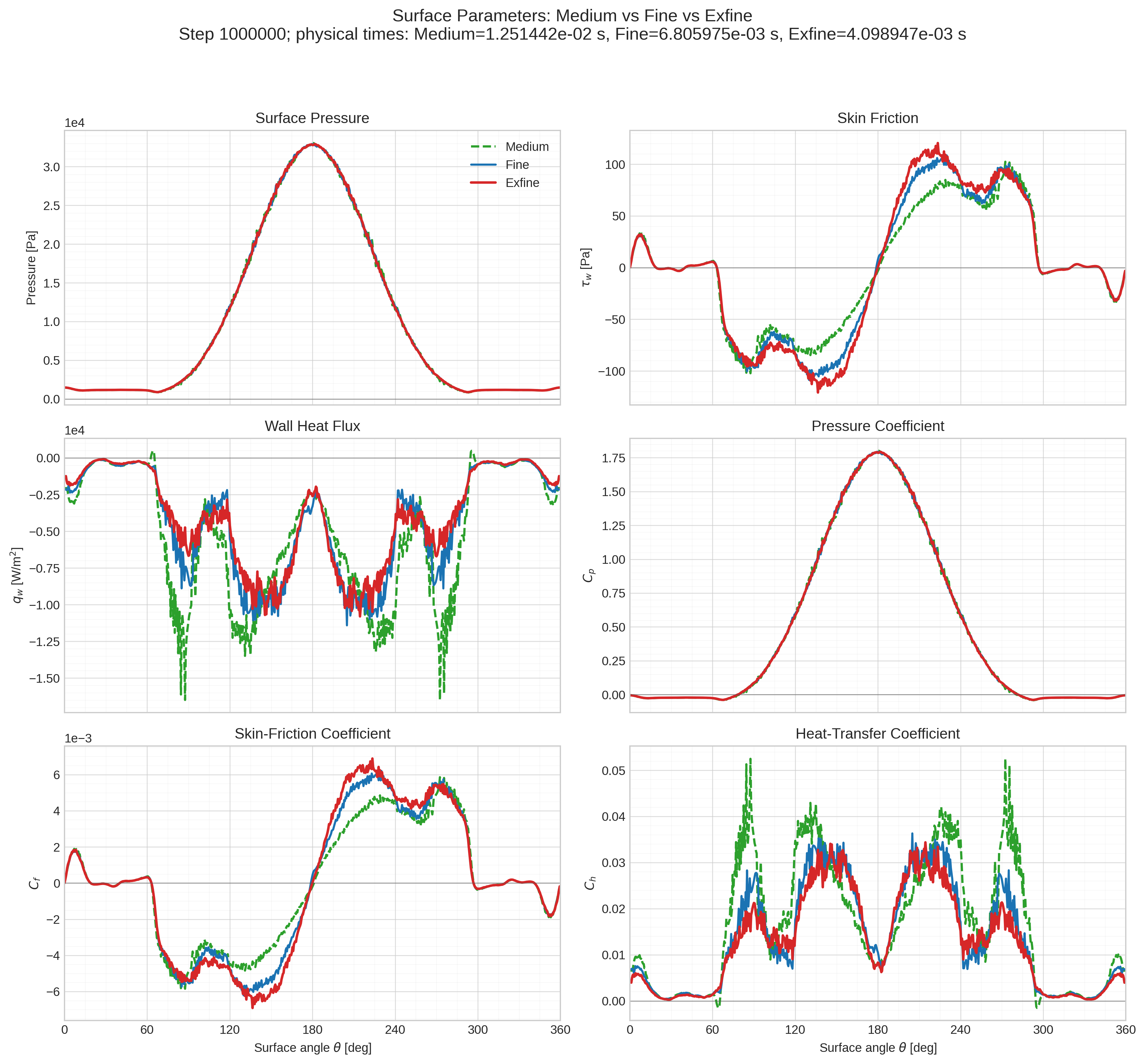
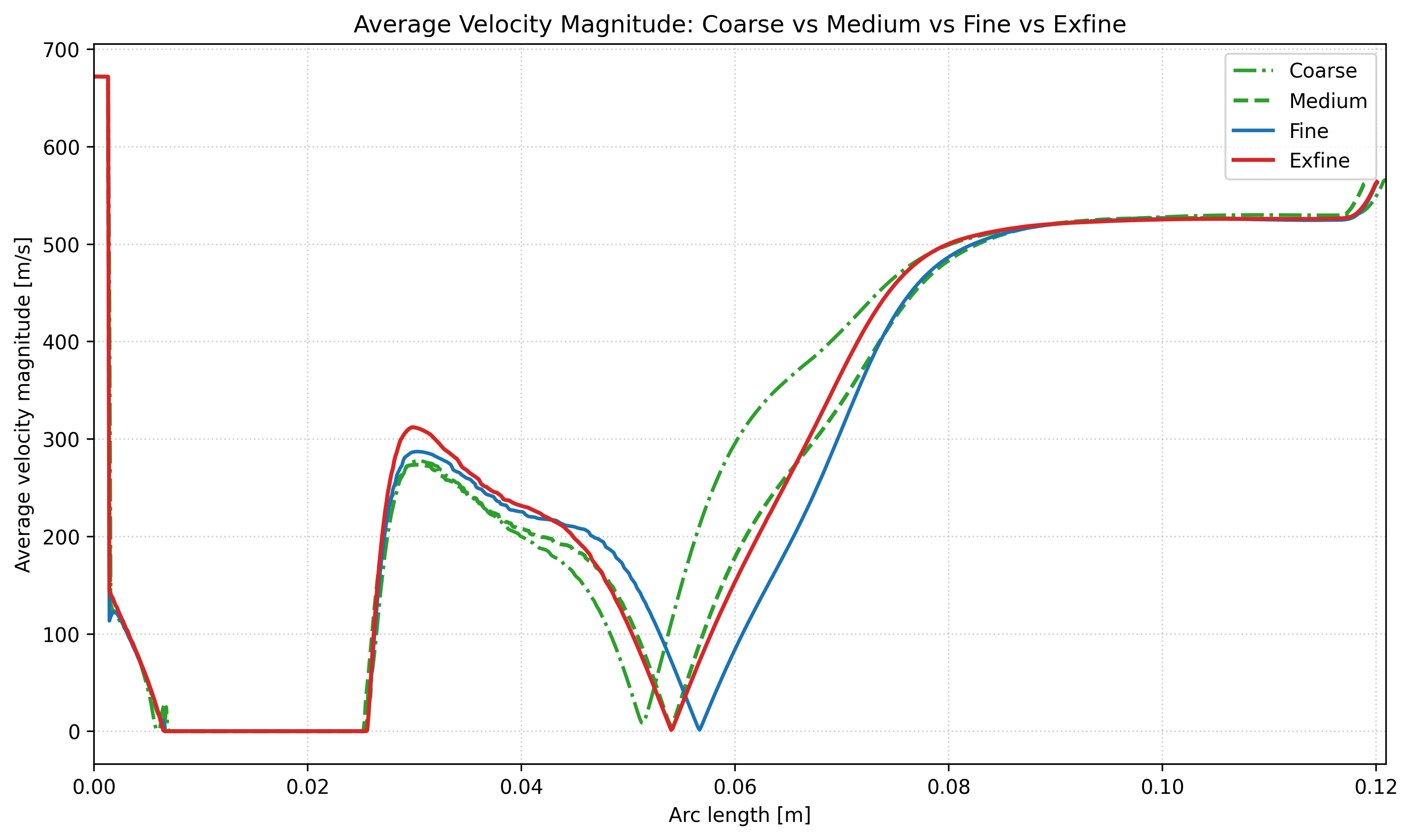
Supersonic flow over a cylinder at Mach 4 was investigated experimentally by Prof. Shepherd's group at Caltech, and HAVA-HYPERFDX1 was validated against the same case. The configuration is particularly challenging because the wake shows the onset of transition to turbulence. The solver reproduced the dominant wake frequencies and the corresponding Strouhal numbers, and the predicted surface quantities agree closely with our in-house OpenFOAM-based solver, which is about 30 times slower. Current work adds real-gas effects, thermochemical nonequilibrium models and wall models for LES.
Low-Reynolds-number Mach 4 flow over a cylinder.Surface quantities on the medium, fine and extra-fine meshes.Time-averaged velocity, medium against fine mesh.